国際学部
【国際学部】国際学部の授業「Topic Studies Ⅱb」を紹介します
<English follows Japanese>
英語力の強化を目指す英語特別課程English Language Honors Track (ELHT)に所属する2年生は、後期の開講科目「Topic Studies IIb」を受講しています。科目名に含まれる「Topic(トピック)」という語にはさまざまな意味がありますが、この科目では「トピック」を古典的な修辞学に基づいて「ある問題を論じる際に用いられる議論の型が蓄えられる頭の中の場所」と位置づけています。
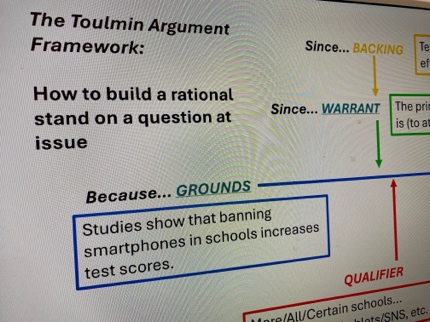
議論には一定のパターンがあることを認識し、そのパターンを学ぶことで、学生たちは未知のトピックをより的確に分析できるようになります。私たちが知っていることよりも知らないことの方がはるかに多いため、新しく馴染みのないトピックを、理解しやすく身近な形に変換する方法を学ぶことは、とても重要なスキルです。本科目で扱う話題のほとんどは、現代の政策に関する議論です。例を挙げると、「子どもの生活において、デジタル機器はどのような位置づけが最適か?」「教室でデジタル機器を使用すべきか?もし使用するのであれば、どのようにすべきか?」「デジタル機器の使用を禁止すべきか?もし禁止すべきだとするなら、その理由は?」「教室でのデジタル機器の使用について、教育分野の研究ではどのようなことが言われているか?」といった問いです。このうち、いちばん最後に挙げた教育分野におけるデジタル機器使用に関する問いは、とりわけ重要です。なぜなら、本科目の目標の一つが、取り上げられた問いに対する回答についての外部の情報源を見つけ出し、取り入れることにあるからです。
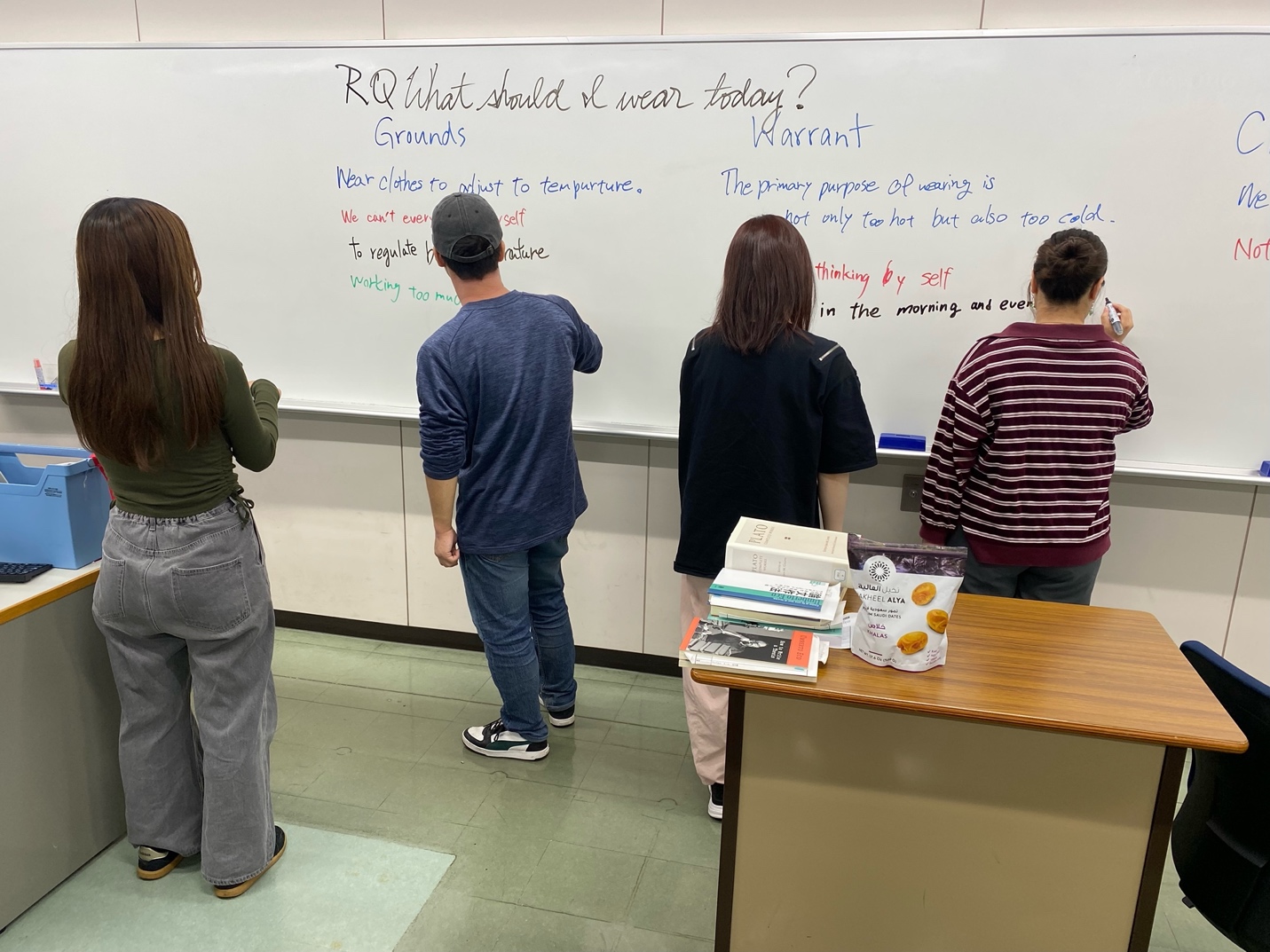
ELHTで学ぶ学生たちは、授業を通して学んだ論証モデルに従って、こうした質問に対する答えを共同で導き出しています。
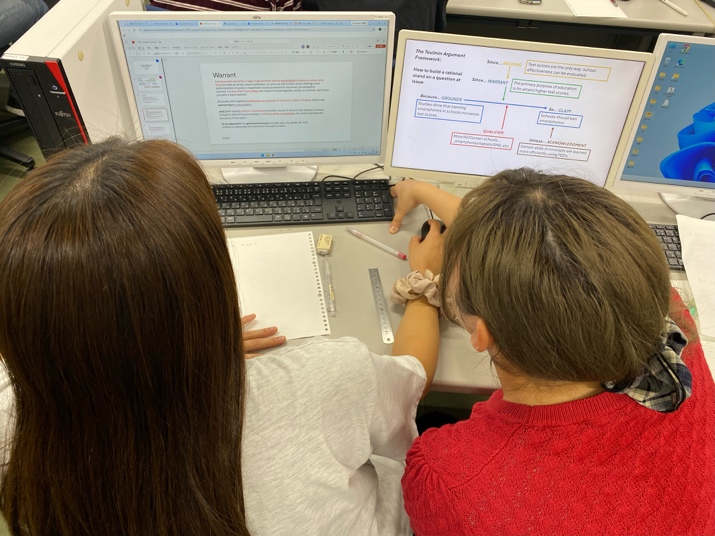
その上で、その結果を皆で共有し、それぞれの主張のなかのさまざまな要素を評価していきます。こうした作業を通じて、学生たちは、特定のトピックについて、説得力のある立場とそうでない立場を見分ける方法を学ぶことができます。
(マイケル ハーキー准教授)
English Language Honors Track Students Study Classical Rhetoric
By Michael Herke
In the fall semester for second year ELHT students take a course called Topic Studies IIb. The course is organized around the classical rhetorical understanding of a topic as a place in the mind where typical arguments on a given issue are stored.
By recognizing that arguments follow patterns and learning these patterns, students are better able to analyze unfamiliar topics. Since the things we don’t know vastly outnumber the things we know, learning how to transform new and unfamiliar topics into the comprehensible and familiar is a vital skill. Most topics in Topic Studies IIb are discussions about contemporary policies. For example, what is the best place for digital devices in the lives of children? Should they be used in classrooms? If so, how? Should digital devices be banned? If so, why? What does educational research say about digital devices in the classroom? This last question is important because one of the course objectives is finding and incorporating outside sources into the responses to the questions at issue.
ELHT students work together to formulate answers to these types of questions following the argumentation models we study.
Then we share our results publicly and evaluate the different elements of each argument to learn how to distinguish strong and weak stances on a given topic.
この記事に関する問い合わせ先
国際学部 国際学部事務室TEL:072-839-9195
MAIL:SETSUNAN.Lbu[at]josho.ac.jp
※メールアドレスの[at]は@に変換してください。